

For eighteen months in my early 20s, I wrote poetry more than anything else, and by all accounts, I was a poet.
I had never been a poet before, or at least I’d always been unsure about calling myself a poet, though I had written many poems. It’s unfair to think of it like this now, years after the fact, and with the benefit of having lived through it all. I’ve always been unsure about calling myself anything. May it be an artist, a writer, a thinker, a student, a worker, a daughter, a lover, a friend— I shied away from a label, not from being too avant-garde or “defying the norms”, but from not being sure if I measured up to the checklist of requirements involved.
I wasn’t afraid to do the work. I was afraid of being perceived as calling myself something and having the work not be enough or not fit the box it was meant to slip into.
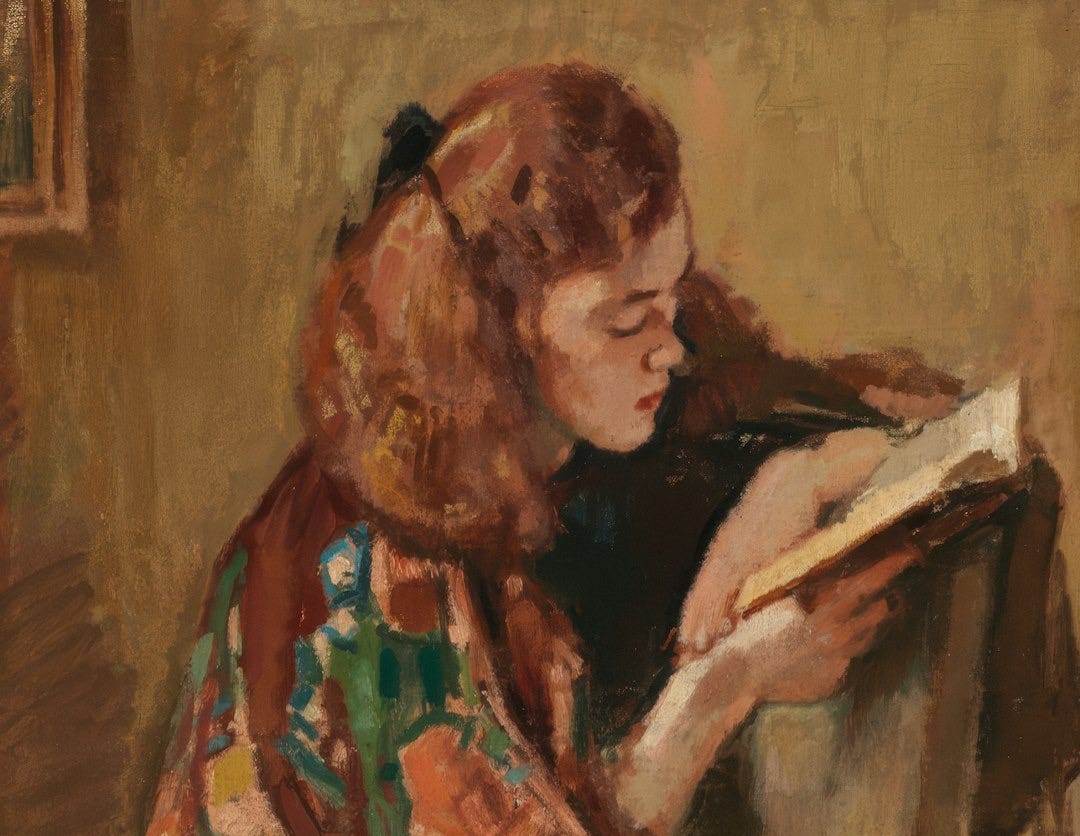
In high school and college, I’d fallen into a group of friends that had specific ideas of what a poet, but specifically a Writer—with a capital W and bolded—was and could be. To them, a Writer was an artist who painted pictures with words, who let their thoughts stain the pages in the name of something bigger than them. Writers took risks that society would deem uncouth or far out and smoked cigarettes, died young, and probably looked a lot like Donna Tartt’s The Secret History1. Think, sex, drugs, and rock and roll, but with an academic and vaguely sadistic twist.
It’s a key plot point of this story that they were also really, really cool. Or at least I thought they were initially. They were almost all older than me, wore leather jackets and designer clothes, and talked about philosophy like some people talk about Marvel movies. They knew everything, and their taste in everything was to be envied. They knew the best music and books, were from families far more wealthy than mine, had all the best ideas, and when they liked you— well, cults do tend to have charismatic leaders.
I wanted to belong. There are several stories for another time that boil down to why I did not belong, most reeking of classism, others relating to the fact that I don’t hate anyone that I do not know on principle.
Either way, at the time, I wanted to be part of their group of Writers, and I tried to agree with them and to be the kind of thing that could meet those requirements. I wrote essays about fate, read books about death, lied about my love for Coldplay and the color pink, and spiraled daily about how I could exist in the world and my course of study, and be so unhappy while having a 4.0 GPA. It is the plight of high achievers everywhere to realize that their worth does not coincide with whether they ace their test or not.
I told others that I was struggling, but to a select group of the population, being miserable as a writer is a requirement of the field. “Suffering is necessary for art,” they’d say. And so I suffered and hoped that art would happen.

That’s what you do when you’re trying to be a Writer or an Artiste (yeah, that e is intentional). You attempt to define yourself and match your peers, and go beyond. I tried to do that. I took every genuine interest of mine and tried to sharpen it or hide it, using each as a tool meant to go for the intellectual kill, but I never really wanted what I was after. There is no “gotcha!” moment in an essay. Believe it or not, if you shout into an empty cave, all you hear back is still your voice and never thunderous applause.
Either I was never meant to be the kind of person who found fulfilment in an academic circle jerk, or perhaps the “writers” of my early 20s were right all along, and I could not grasp their greatness. There is also a third option, where I simply didn’t like the view from the pedestal I was supposed to put myself on.
Those who once were my peers in college would not agree with me now, I am sure, but I’m not sure it’s possible to “go beyond” when you’ve never challenged the ideas you find to be self-evident. Even philosophy, even writing, even sex, drugs, Nietzsche, and Hemingway can be a bubble. It is okay to think a lot and write a lot and still enjoy Taylor Swift. I promise. It does not make you worth any less or any more; it simply makes you human.
We humans who write come in different styles, it turns out. Some of us write smut, some of us write poetry, and some of us write long treatises about the financial state of the world. We all deserve to be here.
It is this thought that eventually became a cornerstone belief of mine around age 24. Through my time in college, and then my life after, I learned that neither I nor the world ended if I wrote a corporate email or found myself enjoying a season of Bridgerton. I didn’t have to write the next great American novel to have my existence be worthwhile or for my life to be full of meaning; I didn’t have to know more than anyone about anything.
The world is vast and full of so many people and so many things that you and I will never know, and that is beautiful. To not understand, to not know, to not experience, is just as much a gift as it is to know things. There is no inherent worth in intellectualism; there is nothing one person can do to be more worthy of love or success. Worth is not connected to love, nor smarts; it is connected to your self-worth and your personal opinion, whether you find yourself worthy of your own regard, and that is about it.
I find the same to be true about writing, although I’ve been working hard to dissect the way I think about the way I write and how it sits in my head.
When I was a child, when I wrote, it felt like flying. I could go anywhere, do anything, say anything I wanted, and be whoever or whatever I wanted to be. It was an extension of my imagination and my hope for everything that life was supposed to hold.
Naturally, that’s part of why I wanted to go to college for English. I thought that to major in something I loved so much would mean I would be happy forever. I credit going to college with starting to ruin my relationship with my writing and my relationship with myself. I learned that not everyone viewed writing the same way I did. To some, it was this thing that separated the few from the many. It was a thing of quality that should be gatekept and coveted. I did not believe in that at all.
I do think it can be honed and used for good or ill, but for me, it’s more closely related to storytelling and the ease with which some people can tell their tales. Grammar and spelling have only been standardized for the last 300 or so years. Stories are far older than that, and so is our collective history with them. Writing is more than words on a page; it has more context, and therefore should be able to be many different things at once.

In hindsight, it is not the college’s fault that I broke up with writing, nor the fault of the people I spent time with, nor mine. It was a time in my life when I was trying to find my boundaries and opinions, and found them only in retrospect. I let a lot of horrible things happen to me because I did not speak up, and I have learned the valuable lesson of the importance of being myself, even if others hate me for it.
While this essay has come easier than others I’ve written this summer, trying to find my way back to my more authentic and personal writing style has been hard. I have a lifelong dream of publishing a book, but as I’ve been working through my manuscript and my other ideas, I find they fall flat. Nothing feels the way it did before I started college, and the last time I felt connected to my writing was my time writing poetry.
At that time in my life, poetry was my sole creative outlet. I poured all of my pain, all of my worries, and all of myself into it. It reached the point where it affected the way I wrote my college assignments. The most common compliment/complaint I got in my last year of college was that my essays read too poetically, and my sentence structure strived for melody more than meaning. In this essay, you can probably see some of that residual poetry even though it’s been five years.
I’ve begun to think of writing as something done in degrees. Some writing is soft and meant for your soul, speaking to that intangible thing that only you can know it’s an answer to. Some, meanwhile, is louder. It’s meant for consumption, may it be a work email or assignment, or a story meant to be shared. For me, the two used to be the same. I could write stories and mean them, emails and mean them, words and mean them. Now, I write many things and mean almost none of them, except if it’s something like this essay or the few pieces I’ve written about loss.
That difference is what sings to me from across the great void, from far across the sea of time, telling me to keep trying. Sometimes I can hear my younger writing voice before I pick up a pen, but by the time I put those words onto paper, she’s disappeared.
The best answer I have for it is that sometimes, when someone hurts so much, they take the wounded parts of themselves and pull them inside. They take them out of the rain and out of the heat of someone else’s gaze, and they set them by the fire to mend. Maybe they are forgotten there, left to warm up but never to come home. I’d like to think that in my case and the case of many artists and writers turned from their crafts due to pain or distance, it will be more like the path of a butterfly.
I’m trying to learn how to write about the parts I’ve taken inside of myself in hopes that the stories that I know lie in wait will one day feel ready to come out. There are tales about granddaughters and grandmothers, sisters and friends, adventure and longing, dreams and fate, home and lack thereof, all kept under lock and key.
One day, they will be ready, but until then, I will continue to try to write the things close to my heart into the stories I mean to share, and maybe at some point, they will end up on here.
Admittedly, I’m not sure how to end this essay, but I suppose the main thought is that whatever kind of writer you are, know that you’re meant to be here and that what you write is worthwhile, may it be grocery lists or an epic series.

It may not surprise you to know that I hate The Secret History with more feeling than it truly deserves. It reminds me of my college experience, and at some point, either on here or in therapy, I should delve deeper into it, but I can only cross-examine myself so many times in one substack essay. So if you love The Secret History, I’m so sorry.